Sea Buckthorn Watercolor Clip Art Illustrations
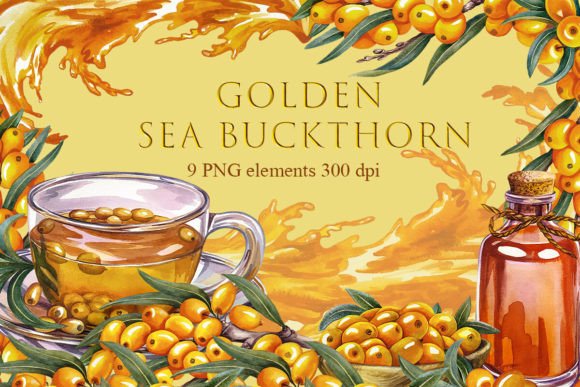
As a handmade business owner who has spent countless hours refining product lines for Etsy and local craft fairs, I approach every new graphic design asset with a critical eye. When I first opened the Sea Buckthorn Watercolor Clip Art files, I wasn't just looking for pretty pictures; I was evaluating whether these illustrations could actually survive the production line. My immediate impression was one of organic elegance and rustic warmth. The vibrant orange berries against soft, textured foliage evoke a sense of late summer abundance and natural wellness. This isn't a cutesy or cartoonish aesthetic; it feels premium, botanical, and grounded. For my shop, this mood immediately suggested a target customer who values sustainability, herbalism, and sophisticated cottage-core aesthetics. It is the kind of visual language that attracts buyers looking for artisanal quality rather than mass-produced generic goods.
Real-World Applications for Seasonal Product Lines
In my studio, versatility is non-negotiable. I tested this Sea Buckthorn Watercolor Clip Art across multiple mediums to see how it performs in actual crafting scenarios. For sublimation design, the high-resolution PNG files were exceptional. I created a tumbler wrap featuring a cascading branch of sea buckthorn berries, and the color saturation remained rich even after heat pressing onto white polymer coating. The watercolor texture translated beautifully without pixelation, which is often a risk with digital assets. Similarly, for printable design projects like greeting cards and planner stickers, the transparency was clean. There were no jagged edges or gray halos around the berries, making sticker design efficient and professional-looking without needing extensive editing in Photoshop or Illustrator.
For vinyl crafters using Cricut or Silhouette machines, the application requires a different mindset. While these are primarily raster illustrations, they serve as perfect backgrounds for layered vinyl projects. I used the clipart as a printed base layer on cardstock and then applied a simple black vinyl quote over the top for a mug design. This hybrid approach leverages the detail of the watercolor while maintaining the durability of vinyl. If you are creating t-shirt designs, this asset works best when treated as a direct-to-film transfer or sublimation print rather than traditional cut vinyl, due to the intricate shading inherent in watercolor styles. However, for tote bags and tea towels, the earthy tones of the sea buckthorn create a stunning, market-ready look that stands out at craft fairs.
Where These Illustrations Shine Brightest
Through testing, I found specific niches where this graphic design asset truly excels. Large format applications are its strongest suit. Tumbler wraps, 12x12 scrapbook layouts, and A4 printable wall art allow the delicate brushwork to be appreciated fully. The asset is also incredibly valuable for small business branding. I incorporated individual berry elements into thank-you cards and packaging stickers, creating a cohesive unboxing experience that reinforces an organic brand identity. For those selling digital products, these illustrations are perfect for creating product mockups. Placing a jar of honey or a bottle of essential oil amidst the sea buckthorn branches instantly elevates the perceived value of the item. They also work wonderfully in seasonal craft bundles for autumn harvest themes, Thanksgiving table settings, or winter wellness collections, providing a unique alternative to the ubiquitous pumpkin or pinecone motifs.
Crafting Limitations and Technical Caution Areas
Honesty is vital in our community, so I must highlight where caution is needed. Do not attempt to use this Sea Buckthorn Watercolor Clip Art for very small cutting details. Watercolor edges are naturally soft and diffuse, which makes them poor candidates for intricate die-cutting or kiss-cutting at sizes smaller than two inches. The blade tends to drag through the faded paint edges, resulting in torn paper or incomplete cuts. Furthermore, avoid using these illustrations on dark-colored substrates without a white under-base. Because watercolors rely on the white of the paper or substrate for luminosity, printing directly onto kraft paper or black fabric will result in muddy, invisible designs. Also, be mindful of crowded compositions. The visual weight of the orange berries is significant; if you overcrowd the layout with too many elements or heavy text, the design loses its airy, elegant appeal. Negative space is your friend here.
Essential Workflow Checks Before Selling
Before listing any finished product made with these design assets on Etsy or taking orders for custom mugs, run through this practical checklist. First, always test the file before selling. Print a sample at actual size to check for banding or color shifts, especially if you are using an inkjet printer for sublimation. Second, verify the commercial license. Just because you bought the clipart doesn't automatically mean you can use it for print-on-demand services or mass production; read the terms to protect your handmade business. Third, check resolution rigorously. Ensure the PNG design is at least 300 DPI at the intended print size. Upscaling a low-res image will ruin the watercolor effect and make your product look amateur.
Typography pairing is another crucial step. Because the Sea Buckthorn Watercolor Clip Art has an organic, flowing movement, pair it with fonts that complement rather than compete. A clean serif font adds a touch of apothecary elegance, while a loose handwritten script enhances the personal, artisanal feel. Avoid overly geometric or industrial sans serifs unless you are aiming for a stark modern contrast. Finally, place your designs on real mockups before launching. Seeing the illustration on a curved mug surface or draped over a linen bag helps identify distortion issues that flat previews miss. By treating this asset with technical respect and creative intention, it becomes more than just a digital download; it becomes a cornerstone of a profitable, beautiful seasonal collection.
- Sublimation Testing: Always perform a color calibration print to ensure the vibrant oranges do not shift toward red or brown during heat transfer.
- Vinyl Compatibility: Use as a print-then-cut element or background layer rather than attempting to trace complex internal details for cutting.
- File Organization: Separate individual berry clusters from full branches in your workspace to allow for flexible composition in sticker design and card making.
- Licensing Compliance: Document your commercial license receipt and keep it accessible in case of platform audits on creative marketplace sites.
- Color Profiles: Convert RGB files to CMYK if sending to a professional printer for packaging or labels to maintain color accuracy.