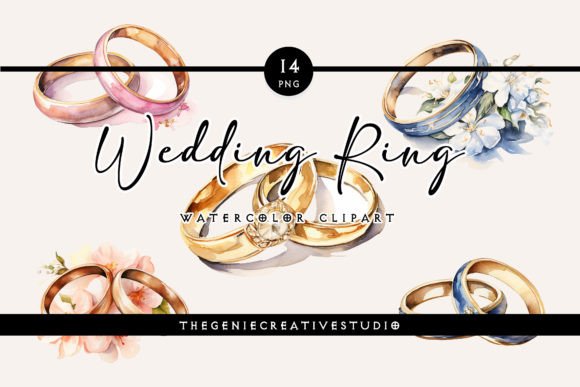
Watercolor Wedding Ring PNG Clipart Review
As an embroidery designer who spends more time behind a multi-needle machine than a computer screen, I approach digital assets with a healthy dose of skepticism. When I first opened the Watercolor Wedding Ring PNG Clipart file, my immediate thought was not about how pretty it looked on my monitor, but how it would translate into thread. We have all been there: downloading a stunning illustration only to find that the gradients are impossible to replicate with satin stitches or that the fine details get lost in the fabric texture. However, after evaluating this specific asset for a recent client project, I found myself pleasantly surprised by its potential as a foundational element for both digital mockups and physical embroidery projects.
First Impressions and Visual Translation
The initial appeal of this Watercolor Wedding Ring PNG Clipart lies in its softness. Unlike harsh vector lines, the watercolor aesthetic offers a romantic, organic flow that is currently dominating the wedding and personalized gift market. From a design perspective, the color blending suggests where thread transitions should occur naturally rather than abruptly. For those of us creating custom apparel or boutique products, this visual style signals "handmade" and "artisanal" immediately. It avoids the stiff, corporate look that can sometimes plague commercial embroidery, making it an ideal candidate for items that need to feel intimate and bespoke.
I recently used this clipart as a reference while preparing a custom embroidered tote bag for a bridal party. The goal was to create a keepsake that felt vintage yet modern. The PNG served two purposes: it acted as the base for our printable mockup to get client approval, and it provided the color map for digitizing the actual machine embroidery design. Because the watercolor edges are soft, they forgave minor registration shifts during stitching that would have been glaring errors in a crisp line-art design. This forgiving nature is a massive asset when working with textured fabrics like canvas or linen, where perfection is difficult to achieve.
Real-World Application Across Products
In my studio, we tested the application of this design concept across three distinct categories to see where it truly shines. For sweatshirt embroidery and custom apparel, the watercolor ring motif works beautifully as a left-chest placement. The key here is scale; the design needs enough breathing room to let the color variation show. On a heavyweight french terry sweatshirt, the fill stitch areas mimicked the watercolor wash effectively, creating a high-value handmade product that justifies a premium price point on Etsy or at craft fairs.
For baby embroidery and nursery decor, the softness of the illustration is paramount. Sharp, dense satin stitches can be abrasive against delicate skin. Using this watercolor style as a guide allowed us to utilize lighter stitch density and softer rayon threads, resulting in a finished product that was safe for infants while maintaining visual impact. Similarly, for tea towels and kitchen linens, the design held up well to washing because the watercolor aesthetic inherently looks better with a bit of wear and softness, unlike rigid logos that look broken when the fabric crinkles.
Digital product sellers and Etsy shop owners will also find immense value here beyond physical stitching. As a digital asset, this clipart elevates printable mockups instantly. When presenting a custom embroidery listing, showing a realistic, watercolor-rendered preview helps bridge the gap between customer expectation and the final stitched reality. It builds trust because it sets a mood rather than promising pixel-perfect precision that thread cannot always deliver.
Navigating Fabric Limitations and Technical Constraints
Despite its versatility, this Watercolor Wedding Ring PNG Clipart requires careful handling depending on your substrate. If you are planning to use this for cap embroidery or curved surfaces, proceed with caution. Watercolor designs often rely on subtle shading that gets distorted when the fabric curves away from the needle. On a structured hat, the gradient may appear banded or disjointed. In these cases, I recommend simplifying the design elements or using the clipart strictly for the flat brim area rather than the crown.
Dark fabrics present another challenge. Watercolor relies on transparency and light interaction. Stitching this onto black or navy material without significant modification will result in a muddy, unrecognizable mess. You must either add a white underlay base to act as a canvas for the colored threads or invert the design logic entirely. Always test on scrap fabric first. I cannot stress this enough: never run a new watercolor-inspired embroidery file on a final garment without verifying how the thread colors interact with the fabric texture under natural lighting.
Small hoop sizes also demand restraint. The beauty of watercolor is in the blend, which requires space. Compressing this design into a 2x2 inch area forces the digitizer to increase stitch density drastically, leading to puckering and bulletproof patches. If you need a tiny version for a collar tag or sleeve cuff, consider extracting just the band detail or switching to a running stitch outline interpretation rather than trying to force the full watercolor effect into a miniature footprint.
Professional Designer Notes for Success
To maximize the value of this asset in your craft business or commercial embroidery workflow, keep these practical considerations in mind:
- Verify Licensing Terms: Before selling any finished product or digital derivative, confirm the specific license attached to this Watercolor Wedding Ring PNG Clipart. Ensure it covers commercial use for both physical goods and digital mockups if that is your intent.
- Thread Color Matching: Do not rely solely on screen colors. Pull physical thread samples and lay them over the printed PNG to verify contrast and harmony. Screen brightness often misrepresents how polyester or rayon threads will actually reflect light.
- Stabilizer Selection: Because watercolor styles often involve varying stitch densities to simulate paint washes, proper stabilization is critical. Use a cut-away stabilizer for stretchy knits to prevent distortion of the soft edges, and a tear-away for stable wovens like denim or canvas.
- Mockup vs. Reality: Use the PNG to create beautiful marketing materials, but include a disclaimer or photo of actual stitch-outs in your listings. Customers appreciate seeing the texture difference between the digital art and the embroidered patch or applique design.
- Check File Specifications: Since this is a raster image, ensure the resolution is sufficient for your intended use. If you are digitizing from this source, a low-res file will lead to jagged edges in your embroidery software. Always work with the highest quality source available.
Ultimately, the Watercolor Wedding Ring PNG Clipart is more than just a pretty picture; it is a versatile tool for the modern maker. Whether you are digitizing a new collection for your small shop, creating personalized gifts for a wedding party, or upgrading your digital storefront visuals, this illustration offers a blend of elegance and practicality. By respecting the technical limitations of thread and fabric while leveraging the emotional resonance of the watercolor style, you can transform this digital asset into tangible, profitable, and beautiful creations that resonate deeply with clients seeking that perfect handmade touch.