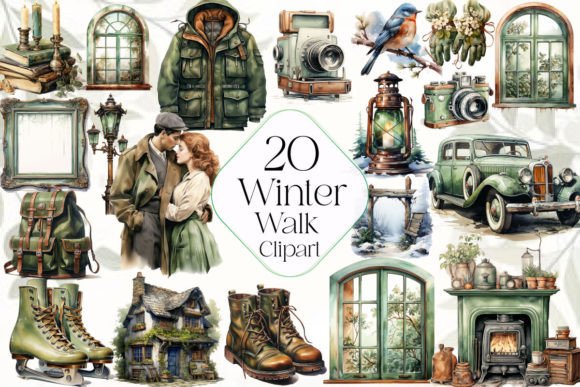
Watercolor Winter Walk Clipart: An Embroidery Review
As a professional embroidery designer and product reviewer, I approach every new digital asset with a specific question: will this actually stitch out beautifully on fabric? When evaluating Watercolor Winter Walk Clipart, my assessment goes far beyond the screen. While these illustrations are visually stunning in digital format, translating that soft, painted aesthetic into a tangible machine embroidery design requires careful consideration of texture, density, and end-use application. This review breaks down how this artwork performs when moved from a digital canvas to a physical hoop.
Capturing the Soft Aesthetic in Thread
The first impression of Watercolor Winter Walk Clipart is one of delicate nostalgia. The artwork features muted tones, organic edges, and a dreamy atmosphere that evokes cozy winter scenes. For an embroidery digitizer or crafter, this mood is both an opportunity and a challenge. Unlike bold, graphic vector art, watercolor styles rely on subtle color blending and transparency. In embroidery, we cannot print ink; we must simulate it through thread layering.
When reviewing this collection for real-world projects, I look at how the shapes translate to stitch types. The soft edges of these illustrations suggest a need for specialized digitizing techniques. Standard satin stitch borders often feel too harsh for watercolor art. Instead, this style demands edge-run stitches or light running stitch outlines to maintain that painterly, unfinished look. If you are purchasing this as a pre-digitized embroidery file, check specifically for how the edges are handled. If the digitizer used heavy satin borders, the design may lose its intended watercolor charm and look more like a cartoon patch. Ideally, the fill stitch patterns should vary in direction and density to mimic brush strokes rather than solid blocks of color.
Real-World Application: The Custom Sweatshirt Test
To truly judge the viability of Watercolor Winter Walk Clipart, I mentally place it in a current market scenario. Right now, oversized crewneck sweatshirts featuring nature-inspired, cottage-core aesthetics are dominating Etsy shops and boutique shelves. Let’s imagine creating a premium sweatshirt embroidery piece using a winter forest scene from this clipart set.
In this scenario, the goal is a high-value handmade product that justifies a higher price point. The watercolor style adds perceived value because it looks artistic rather than mass-produced. However, fleece and French terry fabrics have texture. When stitching this design on a sweatshirt, the pile of the fabric can swallow fine details. My practical advice here is to ensure the stitch density is sufficient to cover the fabric texture without becoming bulletproof. A watercolor design needs room to breathe; if the stitches are too dense, the garment becomes stiff and unwearable. Conversely, if they are too sparse, the fleece shows through, muddying the pastel winter colors. Using a medium-weight cutaway stabilizer is non-negotiable here to support the complex color changes typical of watercolor digitizing while maintaining garment drape.
Navigating Fabric Limitations and Hoop Sizes
While Watercolor Winter Walk Clipart shines on stable knits and woven cottons, it requires caution on other substrates. As a reviewer, I must highlight where this design type struggles so you can avoid costly mistakes in your craft business.
- Sheer and Lightweight Fabrics: Watercolor embroidery often involves multiple thread layers to create shading. On organza, voile, or thin linen, this accumulation of stitches can cause puckering or tearing. These illustrations are generally too complex for delicate baby clothes unless significantly resized or simplified.
- High-Pile Textiles: On plush blankets or terry towels, the intricate details of a winter walk scene may get lost. You may need to add a knockdown stitch underneath the design area to flatten the pile before stitching the artwork.
- Curved Surfaces: Caps and structured hats present alignment challenges. Watercolor designs often lack distinct registration points compared to bold logos. If placing this on a curved surface, expect some distortion in the shading gradients. Flat brims or unstructured beanies are safer choices for preserving the artistic integrity of the illustration.
- Small Hoop Sizes: Reducing a detailed watercolor image to fit a 4x4 hoop often results in muddy colors and lost definition. These illustrations typically require larger hoop sizes (5x7 or larger) to allow the thread colors to blend optically. Always verify the minimum recommended size before resizing, as shrinking watercolor art destroys the nuance.
Commercial Viability for Sellers and Makers
For Etsy sellers and small shop owners, visual appeal drives sales. Watercolor Winter Walk Clipart offers a distinct advantage in product photography. The soft, artistic nature of the design photographs beautifully in flat lays and lifestyle shots, enhancing the perceived quality of custom apparel and home decor. It signals to buyers that the item is a thoughtfully curated personalized gift rather than generic merchandise.
However, commercial success also depends on durability. Watercolor-style embroidery can sometimes be less durable than traditional solid-fill designs due to the varied stitch lengths and potential gaps in coverage. If you are selling items like tote bag designs or kitchen textiles that will face frequent washing, you must test the washability. Ensure the top thread has adequate tension and that the bobbin thread isn't pulling through the lighter shaded areas. For products intended for heavy use, consider framing the watercolor element within a simpler border or combining it with text to anchor the design structurally.
Additionally, if you plan to use these assets for printable mockups or digital listings before stitching, ensure the resolution supports high-quality previews. Customers buy based on what they see online. The transition from digital preview to finished product must be seamless to build trust and encourage repeat business.
Essential Designer Notes Before Stitching
Before loading Watercolor Winter Walk Clipart into your machine for a client project or inventory run, follow this practical checklist to ensure professional results:
- Verify Licensing: Confirm whether your purchase includes commercial rights for finished embroidered products versus digital redistribution. Never assume a digital embroidery file allows for unlimited commercial scaling without checking the specific license terms.
- Test on Scrap Fabric First: Do not risk a $30 blank sweatshirt on an untested design. Stitch out the design on a scrap of the exact fabric and stabilizer combination you intend to use. Check for registration issues between color layers.
- Audit Thread Colors: Watercolor designs often call for dozens of thread changes. Review the color chart against your physical thread stash. Subtle shade variations matter immensely here; substituting a bright green for a sage green can ruin the winter mood. Ensure you have the correct thread colors before starting.
- Check Contrast on Dark Fabrics: These illustrations are typically designed with light backgrounds in mind. If stitching on navy or black fabric, the pale watercolor threads may disappear. You may need to stitch a white underlay base first to make the colors pop, which changes the stitch count and feel.
- Inspect Small Details: Zoom in on the design file. Are there tiny elements smaller than 2mm? These may not stitch out clearly and could cause needle breaks or thread nests. Edit or remove microscopic details that won't translate to thread.
- Evaluate Stabilizer Choice: Match the stabilizer to the fabric weight and design density. Watercolor art usually benefits from poly-mesh cutaway for knits to prevent show-through, or tear-away for stable wovens if the design isn't overly dense.
Ultimately, Watercolor Winter Walk Clipart represents a beautiful intersection of digital art and textile craft. When treated with respect for the medium's limitations, it yields holiday embroidery and winter merchandise that feels genuinely handmade and artistically significant. By understanding the relationship between the painted source and the stitched output, you can transform these lovely illustrations into profitable, cherished keepsakes.